The Art of Allowing: Embracing Life's Flow
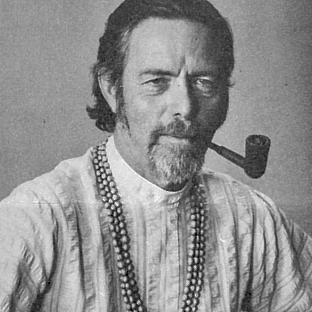
Alan Watts once said, "The art of living is the art of allowing." This profound statement invites us to reconsider our relationship with existence itself. In a world often characterized by striving and resistance, Watts encourages us to embrace a more fluid approach to life, one that recognizes the inherent beauty in surrendering to the present moment. This perspective is not merely a passive acceptance but an active engagement with the unfolding of life, suggesting that true wisdom lies in our ability to allow things to be as they are.
To allow is to cultivate a deep trust in the natural rhythms of life, acknowledging that control is often an illusion. In this light, Watts' words resonate with a timeless truth: that the essence of living well is found not in rigid adherence to plans or expectations, but in the graceful acceptance of whatever arises. This art of allowing invites us to let go of our preconceived notions and to open ourselves to the richness of experience, fostering a sense of peace and connection with the world around us.
The image / the metaphor
The phrase "the art of allowing" conjures images of a gentle stream flowing effortlessly over stones, adapting to the contours of its environment. The verbs chosen—"art" and "allowing"—suggest a creative process, one that requires both skill and sensitivity. To engage in this art is to recognize that life is not a series of obstacles to be overcome but rather a dance of energies that we can learn to navigate with grace. The felt sense of allowing evokes a softening, a release of tension, as we learn to trust the unfolding of our lives.
In the speaker's tradition
Alan Watts is often regarded as a bridge between Eastern philosophy and Western thought, particularly in his interpretations of Zen Buddhism. Within this tradition, the concept of allowing aligns closely with the notion of *sunyata*, or emptiness, which teaches that clinging to fixed ideas leads to suffering. By embracing emptiness, we open ourselves to the fullness of experience, allowing life to unfold without the constraints of our expectations. This perspective echoes the teachings of *dharma*, which emphasizes living in harmony with the natural order of things.
In his work, Watts often references the idea of *kenosis*, or self-emptying, which invites us to relinquish our ego-driven desires and to trust in the greater flow of existence. This concept resonates with the Zen practice of *zazen*, or seated meditation, where practitioners cultivate a state of allowing by simply being present with their thoughts and sensations. In this way, Watts' teaching on allowing becomes a practical application of these deeper philosophical principles, guiding us toward a more authentic way of being.
Living the teaching
Consider a modern scenario where the art of allowing can be applied: a busy professional facing an overwhelming workload. In the midst of deadlines and expectations, the instinct may be to push harder, to control every detail. However, by practicing the art of allowing, this individual might pause to assess the situation, recognizing that some tasks can be delegated or that perfection is not always necessary. This shift in perspective can lead to a more balanced approach, where stress is alleviated and creativity can flourish.
Another application of this teaching can be found in relationships, particularly during moments of conflict. Instead of clinging to the need to be right or to resolve issues immediately, one might practice allowing space for emotions to surface and for understanding to develop organically. This approach fosters deeper connections, as both parties learn to listen and to be present with one another, ultimately leading to a more harmonious resolution. In both scenarios, the art of allowing transforms our experiences, inviting us to engage with life more fully and authentically.
A reflection
As we contemplate Watts' assertion that "the art of living is the art of allowing," we are invited to reflect on our own lives. In what areas do we find ourselves resisting the flow of life? What would it mean to embrace a more allowing attitude, to trust in the unfolding of our experiences? By exploring these questions, we can begin to cultivate a deeper sense of peace and connection, allowing life to reveal its inherent beauty and wisdom.



Join the BrightStar Community
Stay connected with daily inspiration, event announcements, and community wisdom